Memory Shortage Beneficiaries
A source-backed view of Sandisk, Kioxia, Silicon Motion, Macronix, Winbond and Japan capex read-through names after a public X thesis highlighted DRAM/NAND shortages, price hikes and memory capex.
Company Profile
The target is a basket across the memory cycle rather than one issuer. It spans NAND producers, NAND controller suppliers, specialty DRAM/NOR makers, and Japan-based equipment/materials companies tied to memory capital expenditure.
| Group | Companies / tickers | Role in the thesis | Signal strength |
|---|---|---|---|
| NAND producers | Sandisk / SNDK; Kioxia / 285A.T | Direct beneficiaries of NAND pricing, data-center storage demand and multi-year customer commitments. | High, because the tweet names the group and official filings show large earnings leverage. |
| Controller layer | Silicon Motion / SIMO | SSD, eMMC/UFS and enterprise boot-drive controllers; benefits when NAND customers and module makers need controller platforms. | High for a single stock because SIMO is directly named and has AI infrastructure customer evidence. |
| Specialty memory | Macronix / 2337.TW; Winbond / 2344.TW | NOR, NAND, DRAM and customized memory exposed to price recovery and product mix. | Medium-to-high; strong Q1 numbers but more cyclical and less directly tied to hyperscale NAND than SNDK/Kioxia. |
| Japan capex chain | Disco / 6146.T; Advantest / 6857.T; Resonac / 4004.T; Towa / 6315.T | Equipment and materials read-through from localized Micron/Japan memory investment. | Medium; direct capex read-through, but order timing must be verified by each company. |
| Industry anchor | Micron / MU | Memory supercycle and Hiroshima capex source. | Useful context; not the preferred page target because the post's actionable read-through is broader than MU. |
China Competitors / Chinese Substitution
China has meaningful segment substitutes in NAND, DRAM and SSD controllers, so the basket should not be framed as structurally irreplaceable. The substitution risk is strongest in domestic China and price-sensitive commercial markets, while export controls, customer qualification, high-end HBM, advanced process tools and Japan/U.S./Taiwan ecosystem integration can keep the foreign basket differentiated.
| Chinese peer / segment | Verified capability | Substitution judgment |
|---|---|---|
| YMTC | YMTC describes Xtacking as a 3D NAND architecture for high throughput, density and data-center/enterprise use cases. YMTC Xtacking | Credible NAND substitute by segment. It can pressure NAND pricing outside restricted channels, but global hyperscaler qualification and geopolitical limits still matter. |
| CXMT | CXMT lists DDR4 modules, LPDDR4X and LPDDR5X products, including server applications for DDR4 and high-speed mobile DRAM. CXMT products | Credible DRAM substitute in standard and mobile memory. HBM and highest-end server DRAM substitution should be treated as developing until customer proof is visible. |
| Maxio | Maxio's official site lists SATA/PCIe SSD controllers and embedded memory controllers. Maxio products | Controller-layer substitute for part of SIMO's market, especially China-local SSD/module designs. |
| GigaDevice / other Chinese NOR and storage names | Listed China memory-design peers overlap with NOR, NAND modules or storage controllers, but public evidence varies by product line. | Segment substitute, not a full replacement for the whole cross-country basket. |
Conclusion: China has strong partial substitutes. The foreign basket's advantage depends on advanced product generation, qualified customer channels, and whether non-China memory capacity receives a scarcity premium.
Executive Summary
The investment read is constructive but cycle-sensitive. The social post meets the trigger threshold because it explicitly links a memory shortage and price-cycle thesis to named, non-superstar securities and suppliers. The strongest single-company proof is SIMO's revenue acceleration and enterprise/AI customer ramp; the strongest NAND proof is Sandisk/Kioxia's data-center and ASP leverage; the cleanest capex read-through is the Japan equipment/material set around Micron's Hiroshima investment.
| Decision point | Current view |
|---|---|
| Investment stance | Positive watchlist basket; avoid treating every memory ticker as equal after large share-price moves. |
| Most actionable target type | SIMO and NAND producers where official results already show operating leverage. |
| Main disagreement | The market may still underappreciate compounding price hikes, but several tickers already price a supercycle. |
| Main caveat | Memory is still cyclical; contract-price strength can reverse if AI inventory, affordability or new capacity changes. |
Key Takeaways
- The post is actionable because it uses explicit positive language, names tickers, and ties them to supply constraints and contract-price increases.
- SIMO is the clearest non-superstar single-stock signal: Q1 sales rose 105% year over year and management pointed to AI infrastructure/GPU customer scale-up.
- Sandisk and Kioxia are direct NAND cycle beneficiaries, but their share prices have already moved sharply and need discipline around ASP sustainability.
- Macronix and Winbond offer specialty-memory leverage with strong Q1 proof; they are more volatile and depend on product mix.
- Micron is a useful anchor and capex source; the page focuses on the less-covered read-through names rather than treating MU as the only target.
- China substitution is material, especially YMTC for NAND, CXMT for DRAM and Maxio for controllers. It is a cap on long-duration scarcity pricing.
Recent Two-Year Share Price Trend
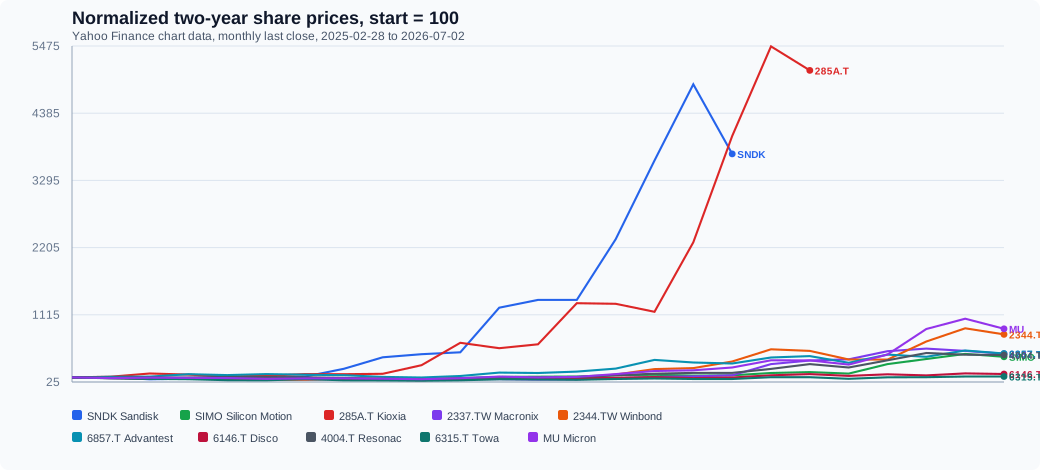
The chart normalizes each listed security to 100 at the start of the captured Yahoo Finance series. It is a risk-control tool: several memory names have already rerated violently, so incremental positive news must be weighed against valuation and cycle peak risk. SNDK chart SIMO chart 285A.T chart
| Ticker | Company | Latest captured price | Two-year / available-period change | Captured range |
|---|---|---|---|---|
| SNDK | Sandisk | 1745.0 USD 2026-07-02 | 3624.7% | 32.11 to 2273.73 |
| SIMO | Silicon Motion | 300.71 USD 2026-07-02 | 333.1% | 49.5 to 333.33 |
| 285A.T | Kioxia | 83300.0 JPY 2026-07-03 | 4979.3% | 1640.0 to 89680.0 |
| 2337.TW | Macronix | 142.5 TWD 2026-07-03 | 384.7% | 18.95 to 166.5 |
| 2344.TW | Winbond | 184.5 TWD 2026-07-03 | 697.0% | 14.35 to 207.5 |
| 6857.T | Advantest | 29345.0 JPY 2026-07-03 | 386.7% | 5863.0 to 32340.0 |
| 6146.T | Disco | 76590.0 JPY 2026-07-03 | 54.9% | 27620.0 to 81260.0 |
| 4004.T | Resonac | 17500.0 JPY 2026-07-03 | 363.2% | 2596.5 to 18720.0 |
| 6315.T | Towa | 3335.0 JPY 2026-07-03 | 14.7% | 1327.0 to 3340.0 |
| MU | Micron | 975.56 USD 2026-07-02 | 788.3% | 76.95 to 1154.29 |
Market Context
The memory cycle is being pulled by AI servers, data-center storage, HBM allocation and conventional DRAM/NAND supply tightness. TrendForce describes Q3 2026 DRAM supply as exceptionally constrained and still expects 13-18% QoQ contract-price increases even with weaker consumer demand. TrendForce UBS coverage cited higher DDR and NAND price forecasts, including 32% QoQ DDR in Q3 and 30% QoQ NAND. UBS coverage
Micron's FY2026 materials add the structural setup: AI and traditional server demand are constrained by insufficient DRAM/NAND supply, and cleanroom space limits bit growth. Micron deck This supports the tweet's point that price hikes compound, but it also means the biggest risk is eventual supply response or demand elasticity.
Company / Segment Quality
| Segment | Quality read | Key evidence |
|---|---|---|
| SIMO controllers | Asset-light controller model with direct leverage to NAND platforms, module makers and enterprise boot-drive demand. | Q1 2026 revenue was $342.1M, up 105% YoY, and Ferri/boot-drive solutions scaled with an AI infrastructure/GPU customer. SIMO Q1 |
| Sandisk NAND | High operating leverage to data-center mix and NAND pricing. | Fiscal Q3 revenue was $5.95B and datacenter revenue rose 233% sequentially. Sandisk Q3 |
| Kioxia NAND | Large pure-play NAND exposure with strong ASP sensitivity. | FY2025 revenue rose 37.0% and operating profit rose 92.7%; March quarter revenue reached 1,002.9B yen. Kioxia FY2025 |
| Macronix / Winbond | Specialty memory and lower-density products can benefit when mainstream capacity moves toward HBM and advanced DRAM. | Macronix Q1 gross margin reached 40.8%; Winbond Q1 gross margin was 53.4%. Macronix Q1 Winbond Q1 |
| Japan equipment/materials | Higher-quality capex read-through when localized fabs and packaging investment continue. | Micron Hiroshima expansion coverage supports the capex direction; company-specific orders still need separate checks. Hiroshima coverage |
Company-Specific Evidence
Each named target needs a different evidence standard. Official filings support the operating cycle; social-source and sell-side notes support the trigger but should not be written as company guidance.
| Claim | Status | Page treatment |
|---|---|---|
| NAND producers are happy into 2027 | Supported directionally by Sandisk and Kioxia operating results; the 2027 shortage duration comes from social/sell-side commentary. | Use as positive thesis with explicit cycle caveat. |
| SIMO benefits from AI infrastructure and enterprise controllers | Official SIMO release names enterprise boot-drive scaling with an AI infrastructure/GPU customer. | Treat as verified company-specific evidence. |
| Macronix / Winbond are favored memory names | Winbond Q1 and Macronix Q1 show strong profitability recovery; Morgan Stanley view is not directly sourced from a public note. | Treat the sell-side mention as social-source context, backed by official financial recovery. |
| Disco / Advantest / Resonac / Towa benefit from Micron Japan capex | The capex project is reported; company order conversion is not confirmed in the source tweet. | Label as read-through, not confirmed orders. |
Competitors
Competition cuts across three layers: memory producers, controller suppliers and semiconductor equipment/materials. The basket contains suppliers at different points in the cycle, so peer comparison matters more than a single valuation multiple.
| Layer | Core names | Competitive issue |
|---|---|---|
| DRAM / NAND majors | Micron, Samsung, SK hynix, Sandisk, Kioxia | Scale and HBM allocation drive pricing power; new capacity can end the cycle. |
| Specialty memory | Winbond, Macronix, GigaDevice, Nanya, YMTC/CXMT segments | Scarcity in mature nodes and product mix can be powerful but volatile. |
| Controllers | SIMO, Phison, Maxio, Marvell, in-house NAND controller teams | Controller attach stays valuable if module makers and SSD brands need rapid qualification. |
| Equipment/materials | Disco, Advantest, Towa, Resonac, Tokyo Electron, SCREEN | Capex conversion depends on tool intensity, order timing and customer concentration. |
Financial Statements
| Company | Latest disclosed result | What matters |
|---|---|---|
| Sandisk | Fiscal Q3 2026 revenue $5.95B, GAAP net income $3.615B, and Q4 revenue guide $7.75B-$8.25B. Sandisk Q3 | Extreme NAND price and data-center mix sensitivity; watch if multi-year commitments protect downside. |
| Kioxia | FY2025 revenue 2,337,628M yen, operating profit 870,369M yen, profit attributable to owners 554,490M yen. Kioxia results | Pure-play NAND leverage with very strong March-quarter ASP benefit. |
| Silicon Motion | Q1 2026 net sales $342.1M, GAAP gross margin 47.1%, GAAP net income $66.8M. SIMO Q1 | Controller growth and AI/enterprise boot-drive ramp need to offset consumer volume pressure. |
| Macronix | Q1 2026 net sales NT$10.469B, gross margin 40.8%, net profit around NT$1.78B. Macronix Q1 | Turnaround quality depends on NAND/NOR mix and monthly pricing discipline. |
| Winbond | Q1 2026 revenue NT$38.253B, gross margin 53.4%, net income NT$10.114B. Winbond Q1 | Strong specialty memory upcycle; application mix and China competition matter. |
Forecast / Operating Bridge
| Driver | Base assumption | Upside path | Downside check |
|---|---|---|---|
| Memory pricing | DRAM/NAND contract prices keep rising through Q3/Q4 but slower consumer demand limits pass-through. | AI server and data-center storage absorb higher prices into 2027. | Consumer and enterprise customers defer builds or reduce capacity per device. |
| NAND producers | Sandisk/Kioxia enjoy strong ASP and mix in 2026. | Multi-year committed customers support more durable margins. | New capacity and customer affordability cause price reversal. |
| SIMO | Higher ASP PCIe 5 / enterprise boot-drive controllers grow despite weaker low-end SSD units. | AI infrastructure/GPU customer ramps expand faster than expected. | NAND shortages reduce SSD unit volume enough to offset controller ASP. |
| Specialty memory | Macronix/Winbond continue mix recovery. | Mature-node scarcity persists as big suppliers prioritize HBM and advanced memory. | China suppliers and inventory rebuild cap pricing. |
| Japan capex read-through | Micron/Japan capex supports tool and material demand. | Localized memory investment pulls forward orders. | Capex timing slips or benefits concentrate in different suppliers. |
Valuation / Scenarios
Valuation discipline is the central risk control. Many memory stocks have already produced multi-bagger moves, so the question is not whether the cycle is strong. The question is whether future ASP, volume and customer-commitment evidence can support the current market cap after the rerating.
| Scenario | Description | Implication |
|---|---|---|
| Bear | DRAM/NAND pricing overshoots, AI storage orders pause, and customers push back on affordability. | Avoid high-beta memory producers after parabolic moves; prefer only balance-sheet-strong names. |
| Base | Price increases continue through 2026, but 2027 depends on capacity, inventory and customer commitments. | Selective basket stance; SIMO and financially verified NAND names remain watchlist candidates. |
| Bull | Shortage extends through 2027, firm customer commitments reduce cyclicality, and Japan capex converts into supplier orders. | Basket rerates further; suppliers with explicit order conversion can outperform broad memory indices. |
Catalysts
- Sandisk and Kioxia quarterly results showing data-center mix, ASP and customer-commitment durability.
- Silicon Motion follow-up guidance on MonTitan, PCIe 5 controllers, enterprise boot-drive customers and AI infrastructure programs.
- Macronix and Winbond monthly sales plus gross-margin continuation after Q1's sharp recovery.
- Micron Hiroshima project details, Japan subsidy updates and tool/material order announcements.
- TrendForce, company calls and channel checks showing whether Q3/Q4 price hikes are accepted by customers.
Risks
- Memory cycles can reverse quickly when customers double-order, inventories rebuild or new capacity comes online.
- Some cited shortage duration and sell-side preferences are not company guidance; they should remain labeled as social/sell-side context.
- China substitutes can pressure NAND, DRAM and controller markets, especially in domestic China and price-sensitive segments.
- Several tickers already price in a powerful supercycle, so good news may not be enough for further upside.
- Japan capex read-through may accrue to other suppliers or arrive later than equity holders expect.
Questions for Management
- What percentage of 2026 revenue is covered by multi-year customer commitments or take-or-pay structures?
- How much Q3/Q4 pricing is already accepted by customers versus still under negotiation?
- For SIMO, how many AI infrastructure or enterprise customers are ramping with the new controller platforms?
- For Macronix and Winbond, how much of gross-margin recovery comes from price, mix, utilization and currency?
- For Japan equipment/material names, which Micron/Japan fab steps have already converted into orders?
- What would management consider normal mid-cycle gross margin after the current shortage fades?
社交论点
原始推文:https://x.com/aleabitoreddit/status/2073793206408667392。Serenity 把这条帖子定义为内存链综合更新:Micron 广岛资本开支对日本设备和材料有正面映射,NAND 短缺延续到 2027 对 Sandisk/Kioxia 类供应商和 Silicon Motion 有利,Morgan Stanley 仍偏正面看 Macronix/Winbond,UBS/TrendForce 的价格工作显示 DRAM 和 NAND 还有新一轮涨价。Chrome 可见页与公开镜像未显示订阅墙。fxtwitter vxtwitter
| 社交主张 | 证据状态 | 分析含义 |
|---|---|---|
| Micron 广岛资本开支利好本地供应商 | 二级来源称 Micron 广岛扩建约 1.5 万亿日元 / 93 亿美元;Micron 自身 FY2026 材料称 AI 服务器需求和传统服务器需求受到 DRAM/NAND 供给不足约束。广岛扩建 Micron 材料 | 设备和材料供应商可能比 MU 本身更适合作为增量 read-through。 |
| NAND 短缺延续到 2027 | Sandisk 官方 Q3 FY2026 披露 Datacenter 收入环比增长 233%,并转向多年客户承诺;Kioxia FY2025 收入增长 37.0%,经营利润增长 92.7%。Sandisk Q3 Kioxia FY2025 | NAND 生产商和控制器生态的方向得到支持,但股价已经明显重估。 |
| SIMO 受益于控制器需求 | Silicon Motion Q1 2026 收入同比增长 105% 至 3.421 亿美元,并提到企业 boot-drive 与 AI infrastructure/GPU 客户爬坡。SIMO Q1 | SIMO 是具名非超级明星单一标的,且有公司级经营证据。 |
| Macronix / Winbond 是受益内存标的 | Macronix Q1 2026 扭亏并且毛利率显著修复;Winbond Q1 收入同比增长 91.3%,毛利率 53.4%。Macronix Q1 Winbond Q1 | 利基内存公司有周期弹性,同时波动和客户组合风险较高。 |
| DRAM 与 NAND 继续涨价 | TrendForce 称 Q3 2026 DRAM 供给极度紧张,合约价预计环比涨 13-18%;UBS 相关报道给出更高 DDR 与 NAND 价格预测。TrendForce UBS coverage | 这是价格周期正面论点,持续时间受客户承受能力和新增供给制约。 |
触发分类:具名非超级明星内存链篮子达到中等到强正面信号。MU 主要作为资本开支和周期锚点;更适合分析的受益标的是 Sandisk/Kioxia、SIMO、Macronix、Winbond 和部分日本设备/材料供应商。
公司概况
本页分析的是内存周期篮子,不是单一发行人。覆盖 NAND 生产商、NAND 控制器供应商、利基 DRAM/NOR 公司,以及与内存资本开支相关的日本设备和材料公司。
| 分组 | 公司 / ticker | 论点角色 | 信号强度 |
|---|---|---|---|
| NAND 生产商 | Sandisk / SNDK;Kioxia / 285A.T | 直接受益于 NAND 定价、数据中心存储需求和多年客户承诺。 | 强,原帖点名分组,官方披露显示经营弹性。 |
| 控制器层 | Silicon Motion / SIMO | SSD、eMMC/UFS、企业 boot-drive 控制器,受益于 NAND 客户和模组厂平台需求。 | 单一股票信号强,原帖点名且有 AI infrastructure 客户证据。 |
| 利基内存 | Macronix / 2337.TW;Winbond / 2344.TW | NOR、NAND、DRAM 与定制内存受益于价格修复和产品结构。 | 中高,Q1 数字强,但周期性和客户组合风险较高。 |
| 日本资本开支链 | Disco / 6146.T;Advantest / 6857.T;Resonac / 4004.T;Towa / 6315.T | Micron/Japan 内存投资的设备和材料映射。 | 中等,需要用各公司订单验证时点。 |
| 行业锚点 | Micron / MU | 内存超级周期和广岛资本开支来源。 | 作为背景有价值,本页重点放在更少覆盖的 read-through 标的。 |
中国竞对 / 中国替代
中国在 NAND、DRAM 和 SSD 控制器已有可观的局部替代能力,因此不能把这个篮子写成结构性不可替代。替代风险在中国本土和价格敏感市场更强;出口管制、客户认证、高端 HBM、先进制程工具与日韩台美生态整合,仍可能让海外篮子保持差异化。
| 中国同业 / 环节 | 已验证能力 | 替代判断 |
|---|---|---|
| YMTC | YMTC 官方介绍 Xtacking 是面向高吞吐、高密度和数据中心/企业应用的 3D NAND 架构。YMTC Xtacking | NAND 环节有可信替代能力。在受限渠道之外会压制 NAND 定价,但全球客户认证和地缘限制仍重要。 |
| CXMT | CXMT 官方列出 DDR4 模组、LPDDR4X 和 LPDDR5X 产品,DDR4 覆盖服务器应用。CXMT products | 标准 DRAM 与移动 DRAM 具备替代能力。HBM 和最高端服务器 DRAM 仍需客户级证据。 |
| Maxio | Maxio 官方列出 SATA/PCIe SSD 控制器和嵌入式存储控制器。Maxio products | 在中国本土 SSD/模组设计中可替代 SIMO 的部分市场。 |
| 兆易创新等 NOR / 存储设计公司 | 与 NOR、NAND 模组或存储控制器存在局部重叠。 | 是分环节替代,不能完整替代跨国家的内存链篮子。 |
结论:中国存在强局部替代。海外篮子的相对优势取决于先进产品代际、客户认证通道,以及非中国内存产能是否获得稀缺溢价。
执行摘要
结论偏积极但高度依赖周期。本帖达到触发门槛,因为它把内存短缺和价格周期明确连接到具名非超级明星标的。单一公司里 SIMO 的经营证据最清楚;NAND 侧 Sandisk/Kioxia 的数据中心与 ASP 弹性最直接;资本开支映射则集中在 Micron 广岛投资相关的日本设备和材料链。
| 判断点 | 当前观点 |
|---|---|
| 投资态度 | 偏积极观察篮子;不把所有内存 ticker 视为同等机会。 |
| 最可操作标的类型 | SIMO 与官方结果已经验证经营弹性的 NAND 生产商。 |
| 主要分歧 | 市场可能仍低估连续涨价的复利效果,但部分股票已反映超级周期。 |
| 关键 caveat | 内存仍是周期行业;如果 AI 库存、客户承受力或新增供给变化,合约价强势会反转。 |
核心要点
- 这条帖子可触发分析,因为它使用明确正面语言、点名 ticker,并把它们和供给约束、合约价上涨相连。
- SIMO 是最清晰的非超级明星单一股票信号:Q1 销售同比增长 105%,管理层提到 AI infrastructure/GPU 客户放量。
- Sandisk 与 Kioxia 是直接 NAND 周期受益者,但股价已经大幅上行,需要关注 ASP 持续性。
- Macronix 与 Winbond 提供利基内存弹性,Q1 证明强,但波动和产品组合风险更高。
- Micron 是周期和资本开支锚点。本页聚焦更少覆盖的 read-through 标的。
- 中国替代很重要,尤其是 YMTC 的 NAND、CXMT 的 DRAM 和 Maxio 的控制器。它限制长期稀缺定价。
近两年股价走势
图中把每个上市证券在 Yahoo Finance 捕获序列起点归一化为 100。这是风险控制工具:多只内存股已经剧烈重估,后续正面消息需要和估值及周期顶点风险一起判断。SNDK chart SIMO chart 285A.T chart
| Ticker | 公司 | 最新捕获价格 | 两年 / 可获得区间变化 | 捕获区间 |
|---|---|---|---|---|
| SNDK | Sandisk | 1745.0 USD 2026-07-02 | 3624.7% | 32.11 to 2273.73 |
| SIMO | Silicon Motion | 300.71 USD 2026-07-02 | 333.1% | 49.5 to 333.33 |
| 285A.T | Kioxia | 83300.0 JPY 2026-07-03 | 4979.3% | 1640.0 to 89680.0 |
| 2337.TW | Macronix | 142.5 TWD 2026-07-03 | 384.7% | 18.95 to 166.5 |
| 2344.TW | Winbond | 184.5 TWD 2026-07-03 | 697.0% | 14.35 to 207.5 |
| 6857.T | Advantest | 29345.0 JPY 2026-07-03 | 386.7% | 5863.0 to 32340.0 |
| 6146.T | Disco | 76590.0 JPY 2026-07-03 | 54.9% | 27620.0 to 81260.0 |
| 4004.T | Resonac | 17500.0 JPY 2026-07-03 | 363.2% | 2596.5 to 18720.0 |
| 6315.T | Towa | 3335.0 JPY 2026-07-03 | 14.7% | 1327.0 to 3340.0 |
| MU | Micron | 975.56 USD 2026-07-02 | 788.3% | 76.95 to 1154.29 |
市场背景
本轮内存周期由 AI 服务器、数据中心存储、HBM 产能分配和传统 DRAM/NAND 紧缺共同推动。TrendForce 称 Q3 2026 DRAM 供给极度紧张,即使消费需求较弱,合约价仍预计环比上涨 13-18%。TrendForce UBS 相关报道给出更高的 DDR 和 NAND 价格预测,包括 Q3 DDR 环比 32% 与 NAND 环比 30%。UBS coverage
Micron FY2026 材料补充了结构性背景:AI 与传统服务器需求受到 DRAM/NAND 供给不足约束,cleanroom 空间也限制 bit growth。Micron deck 这支持推文中“涨价复利”的观点,同时也说明最大风险来自供给恢复和需求弹性。
公司 / 分部质量
| 分部 | 质量判断 | 关键证据 |
|---|---|---|
| SIMO 控制器 | 轻资产控制器模式,直接连接 NAND 平台、模组厂和企业 boot-drive 需求。 | Q1 2026 收入 3.421 亿美元,同比增长 105%,Ferri/boot-drive 方案随 AI infrastructure/GPU 客户放量。SIMO Q1 |
| Sandisk NAND | 对数据中心 mix 和 NAND 定价有高经营弹性。 | Fiscal Q3 收入 59.5 亿美元,Datacenter 收入环比增长 233%。Sandisk Q3 |
| Kioxia NAND | 纯 NAND 暴露度高,对 ASP 高度敏感。 | FY2025 收入增长 37.0%,经营利润增长 92.7%;3 月季度收入 1.0029 万亿日元。Kioxia FY2025 |
| Macronix / Winbond | 当大厂把产能转向 HBM 和先进 DRAM,利基和成熟节点产品受益。 | Macronix Q1 毛利率 40.8%;Winbond Q1 毛利率 53.4%。Macronix Q1 Winbond Q1 |
| 日本设备 / 材料 | 当本地晶圆厂和封装投资继续,资本开支映射质量较高。 | Micron 广岛扩建报道支持资本开支方向,但仍需逐家公司验证订单。Hiroshima coverage |
公司特定证据
每个具名标的需要不同证据标准。官方文件支持经营周期;社交来源和卖方观点提供触发线索,不应写成公司指引。
| 主张 | 状态 | 页面处理 |
|---|---|---|
| NAND 生产商到 2027 仍受益 | Sandisk 与 Kioxia 经营结果支持方向;2027 短缺持续时间来自社交/卖方语境。 | 作为正面论点使用,并明确周期 caveat。 |
| SIMO 受益于 AI infrastructure 和企业控制器 | SIMO 官方材料提到企业 boot-drive 随 AI infrastructure/GPU 客户爬坡。 | 作为已验证公司特定证据。 |
| Macronix / Winbond 是偏正面的内存名字 | Winbond Q1 与 Macronix Q1 显示利润修复;Morgan Stanley 观点未取得公开研报全文。 | 把卖方提法作为社交语境,核心用官方财务修复支撑。 |
| Disco / Advantest / Resonac / Towa 受益于 Micron 日本资本开支 | 资本开支项目有报道;订单转化未由原帖确认。 | 标注为 read-through,不写成已确认订单。 |
竞对
竞争分为内存生产商、控制器供应商和半导体设备/材料三层。这个篮子包含不同周期位置的供应商,同业比较比单一估值倍数更重要。
| 层级 | 核心公司 | 竞争问题 |
|---|---|---|
| DRAM / NAND 大厂 | Micron、Samsung、SK hynix、Sandisk、Kioxia | 规模和 HBM 分配决定定价权,新增产能会结束周期。 |
| 利基内存 | Winbond、Macronix、GigaDevice、Nanya、YMTC/CXMT 环节 | 成熟节点和产品组合稀缺可能很强,但波动高。 |
| 控制器 | SIMO、Phison、Maxio、Marvell、NAND 厂内部控制器团队 | 如果模组厂和 SSD 品牌需要快速认证,控制器 attach 价值仍高。 |
| 设备 / 材料 | Disco、Advantest、Towa、Resonac、Tokyo Electron、SCREEN | 资本开支转化取决于工具强度、订单节奏和客户集中度。 |
财务报表
| 公司 | 最新披露 | 关键判断 |
|---|---|---|
| Sandisk | Fiscal Q3 2026 收入 59.5 亿美元,GAAP 净利润 36.15 亿美元,Q4 收入指引 77.5-82.5 亿美元。Sandisk Q3 | NAND 定价和数据中心 mix 弹性极高,关注多年承诺能否保护下行。 |
| Kioxia | FY2025 收入 2,337,628 百万日元,经营利润 870,369 百万日元,归母利润 554,490 百万日元。Kioxia results | 纯 NAND 暴露度高,3 月季度 ASP 收益明显。 |
| Silicon Motion | Q1 2026 净销售 3.421 亿美元,GAAP 毛利率 47.1%,GAAP 净利润 6,680 万美元。SIMO Q1 | 控制器增长和 AI/企业 boot-drive 爬坡需要抵消低端消费 SSD 量的压力。 |
| Macronix | Q1 2026 净销售 NT$104.69 亿,毛利率 40.8%,净利润约 NT$17.8 亿。Macronix Q1 | 扭亏质量取决于 NAND/NOR mix 和月度定价纪律。 |
| Winbond | Q1 2026 收入 NT$382.53 亿,毛利率 53.4%,净利润 NT$101.14 亿。Winbond Q1 | 利基内存景气强,应用组合和中国竞争重要。 |
预测 / 经营桥
| 驱动 | 基础假设 | 上行路径 | 下行检查 |
|---|---|---|---|
| 内存定价 | DRAM/NAND 合约价继续上涨,但消费需求弱化限制传导。 | AI 服务器和数据中心存储把高价格吸收到 2027。 | 客户推迟建设或降低单设备容量。 |
| NAND 生产商 | Sandisk/Kioxia 在 2026 享受 ASP 与 mix 支持。 | 多年客户承诺让利润更持久。 | 新增产能和客户承受力导致价格反转。 |
| SIMO | 高 ASP PCIe 5 / 企业 boot-drive 控制器增长,抵消低端 SSD 季节性。 | AI infrastructure/GPU 客户爬坡超预期。 | NAND 短缺压低 SSD 单位出货,抵消控制器 ASP。 |
| 利基内存 | Macronix/Winbond 继续产品结构修复。 | 大厂继续优先 HBM 和先进内存,成熟节点稀缺延续。 | 中国供应商和库存重建限制价格。 |
| 日本资本开支映射 | Micron/Japan 投资支持工具与材料需求。 | 本地化内存投资提前拉动订单。 | 资本开支节奏推迟或收益集中到其他供应商。 |
估值 / 情景
估值纪律是核心风控。许多内存股已经出现多倍上涨。后续判断重点在于未来 ASP、出货和客户承诺证据能否支撑重估后的市值。
| 情景 | 描述 | 含义 |
|---|---|---|
| 悲观 | DRAM/NAND 涨价过度,AI 存储订单暂停,客户开始抵制价格。 | 回避高 beta 内存生产商,只保留资产负债表强的候选。 |
| 基础 | 价格上涨延续到 2026,2027 取决于产能、库存和客户承诺。 | 选择性篮子观点;SIMO 和已由财报验证的 NAND 标的仍值得跟踪。 |
| 乐观 | 短缺延续到 2027,客户承诺降低周期性,日本资本开支转化为供应商订单。 | 篮子继续重估;有明确订单转化的供应商优于宽泛内存指数。 |
催化剂
- Sandisk 与 Kioxia 季度结果,重点看数据中心 mix、ASP 和客户承诺持续性。
- Silicon Motion 关于 MonTitan、PCIe 5 控制器、企业 boot-drive 客户和 AI infrastructure 项目的后续指引。
- Macronix 与 Winbond 月营收以及 Q1 毛利率修复能否延续。
- Micron 广岛项目细节、日本补贴进展和工具/材料订单公告。
- TrendForce、公司电话会和渠道检查显示 Q3/Q4 涨价是否被客户接受。
风险
- 内存周期在客户重复下单、库存重建或新增产能上线时会快速反转。
- 部分短缺持续时间和卖方偏好不是公司指引,需要继续标注为社交/卖方语境。
- 中国替代会压制 NAND、DRAM 和控制器市场,尤其是中国本土和价格敏感环节。
- 多只 ticker 已经反映强超级周期,好消息不一定推动股价继续上行。
- 日本资本开支映射可能流向其他供应商,或兑现时间晚于股票预期。
管理层问题
- 2026 收入中有多少来自多年客户承诺或 take-or-pay 结构?
- Q3/Q4 涨价中有多少已经被客户接受,多少仍在谈判?
- SIMO 的新控制器平台有多少 AI infrastructure 或企业客户正在爬坡?
- Macronix 与 Winbond 毛利率修复中,价格、mix、利用率和汇率分别贡献多少?
- 日本设备/材料公司已经取得哪些 Micron/Japan fab 相关订单?
- 当前短缺消退后,管理层认为正常中周期毛利率是多少?
Social Thesis
Original X/Twitter thesis: https://x.com/aleabitoreddit/status/2073793206408667392. Serenity frames the post as consolidated memory updates: Micron's Hiroshima capital expenditure is a bullish read-through for Japan equipment and materials, NAND shortages into 2027 help Sandisk/Kioxia-type suppliers and Silicon Motion, Morgan Stanley remains positive on Macronix/Winbond, and UBS/TrendForce pricing work points to another round of DRAM and NAND price increases. The visible X page and public mirrors did not show a subscriber-only wall. fxtwitter vxtwitter
Classification: medium-to-strong positive signal for a named non-superstar memory-chain basket. Micron is treated mainly as the capex and cycle anchor; the more analyzable beneficiaries are Sandisk/Kioxia, SIMO, Macronix, Winbond, and selected Japanese equipment/material suppliers.